Your First Crypto
16.08.2021
One of the first steps you will take when beginning to interact with blockchain is to get cryptocurrencies (possibly even before you create a wallet). Without Cryptocurrencies, you can hardly do anything on the blockchain. Consequently, the process of getting your first cryptocurrency is a critical step in onboarding new users. The UX has to ensure that this initial important step is pleasant and easy for everyone to do. In extension, it’s just as important to be able to convert your cryptocurrencies back into fiat currency, because sometimes you need to buy things in everyday life.
That’s why in this article, I’ll take a closer look at the process of new users receiving their first cryptocurrencies, as well as how they can sell them back for fiat currency.
Ways to get Crypto
As many already know, there are two main ways to get cryptocurrencies.
Mining / Staking
Depending on the blockchain’s technical structure, you can receive a specific cryptocurrency from a particular blockchain by either mining or staking. Mining and staking mechanisms are how new tokens are brought into circulation. Mining and staking are, of course, rather advanced activities. So, it is not likely that someone will receive their first crypto by mining.
That’s why we are now going to look at the second way: buying them.
Buying
There are several different ways to buy crypto, but the two most relevant to this article are buying on exchanges and buying through ramp services.
Exchange
At the moment, most people still buy their first cryptocurrencies on exchanges, despite the fact that exchanges are relatively complex products that require a lot of customer understanding (KYC). Exchanges are relatively complex products because exchanges are predominantly designed as a special tool for people who invest. In my opinion, this is why most people currently purchase their first cryptos on exchanges—because the most common use case for crypto at the moment is investments. People tolerate these complex interfaces because they are willing to spend some time to learn the tool they are using to invest. However, as more use-cases arise beyond investing, more people who are not willing to invest time learning how to use investing tools, will come into contact with blockchain and crypto.
As a result of the diversity of crypto users, there is another product category for buying cryptocurrencies: ramp services.
Ramp Services
Theoretically, an exchange could also be called a ramp service. Since, strictly speaking, the term, ‘ramp service’ only refers to the process of buying cryptocurrencies with fiat money. However, the term is often used for a type of product that greatly simplifies the process of buying crypto.
Typically, ramp service interfaces are nowhere near as complex as those of exchanges, and their KYC requirements are usually tiered according to how much a customer wants to purchase. If you want to buy very little, the KYC process is minimal and the whole process will be much easier and faster.
For example, popular ramp services include:
- simplex
- ramp.network
- wyre
- mercuryo
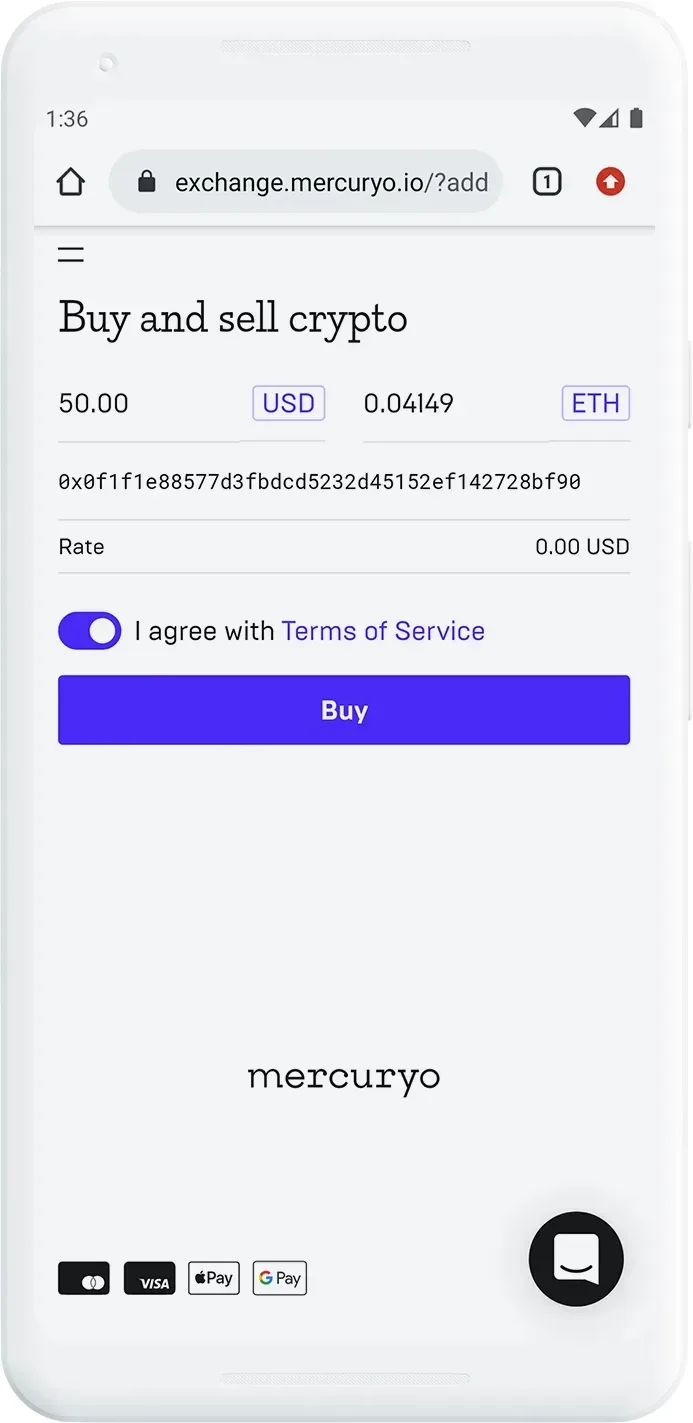
Many wallets have provided on-ramp services in their platforms so that users do not have to go out of their way to buy crypto. However, most wallets only redirect to an on-ramp service, which then opens in a new browser window (as for example the Trust Wallet does in the screenshot shown).
In my opinion, this is not an optimal solution. It is already difficult to build trust for crypto products as many people are inherently skeptical. Being redirected to another website in order to make a purchase, often without an explanation why, undoubtedly deters some people from actually going through with the purchase, because they are not sure if they can trust the website they have been redirected to.
It would be much better if the entire buying process happened in the wallet app, and the transaction with the ramp provider worked in the background, hidden from the user.
With most ramp services, there is a relatively large selection of popular cryptocurrencies that one can purchase. However, not all of them are available, of course. In addition, ramp services support significantly fewer cryptocurrencies when converting back to fiat currencies. When ramp services offer users to sell cryptocurrencies, they often only support bitcoin and ethereum.
For blockchain protocols that are looking to develop use-cases beyond investing, it is important that they make their cryptocurrency simple to buy, i.e., with a ramp service. However, they should also prioritize simple solutions to easily sell this cryptocurrency as well. Without a simple ramp services solution for selling crypto, users will have to go to an exchange to sell. Again, this would run the risk that less technically experienced people would avoid the cryptocurrency altogether. When a currency is too complex for average people to convert into fiat, it becomes worthless in “real world use”, because users can’t easily use it to purchase things they need in “real life”.
Conclusion
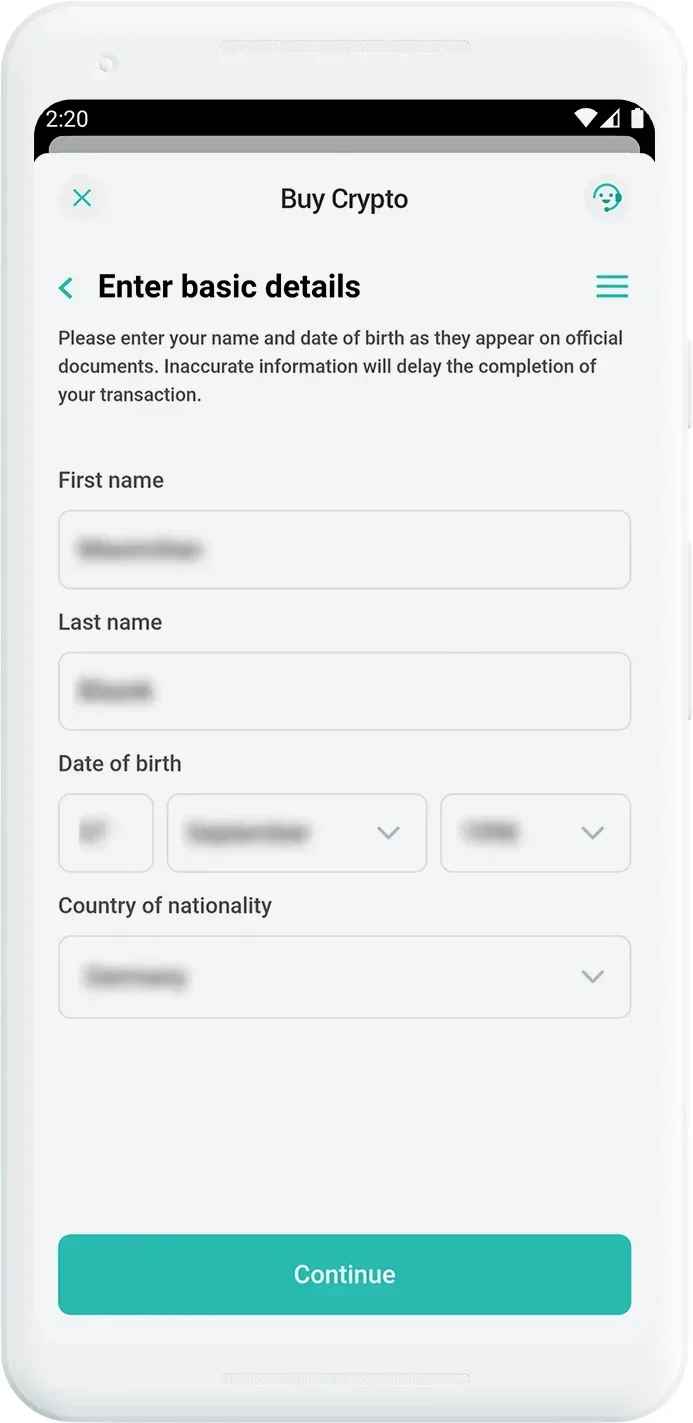
It is still very common for people to buy their first cryptocurrencies on an exchange. However, one should not expect that all users will be willing to do so in the future, especially as use-cases outside of investing become more prevalent. Therefore, all blockchain protocols should seek out ramp services to support their cryptocurrency.
It is great that so many wallets already have onramp services built into their product. However, I think there is still much room for improvement. Wallets should not redirect users to an external website. Instead, they should do everything within their own app (as the ZenGo Wallet does in this example). This change would be a significant step toward a smoother experience for users.